

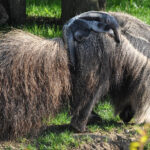
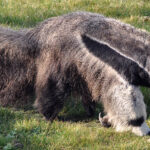

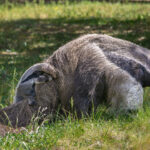
Myrmecophaga tridactyla
An ant eater!
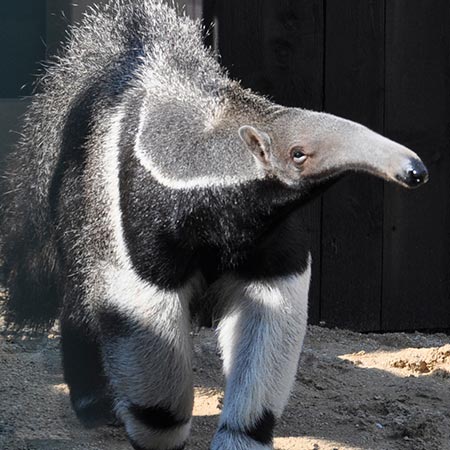
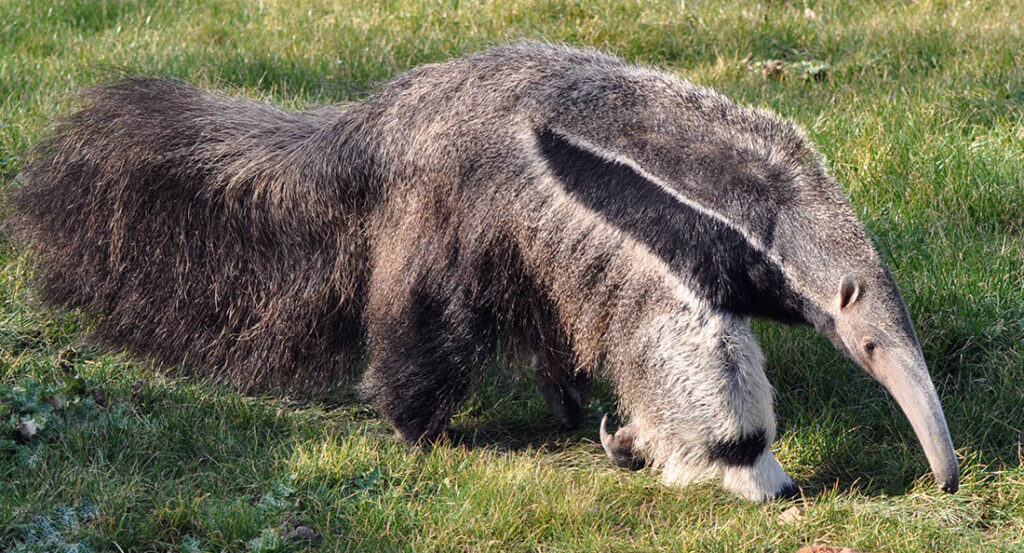
The giant anteater feeds mainly on ants and termites, sometimes on larvae and other insects.
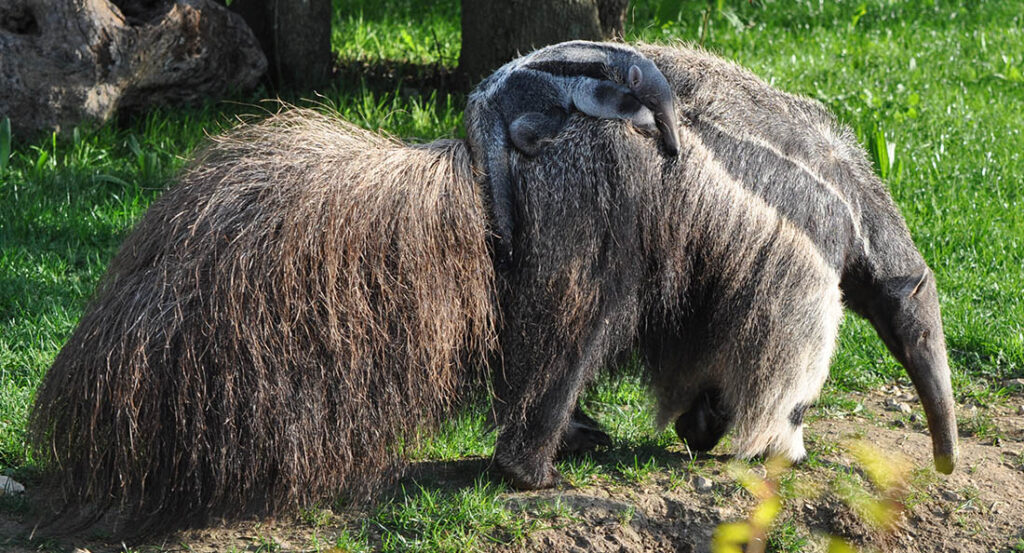
It has a characteristic appearance: thick fur, a tubular snout, a 60 cm tongue (the longest tongue of all mammals!), long claws on the front legs allowing to open termite mounds and anthills…
It is one of the most endangered mammals in Central America and Brazil: it is hunted for its meat, captured for animal trafficking, or simply slaughtered, and the forests and savannahs where it lives are destroyed… That’s why we support the Anteaters & Highways program that works to save them in Brazil.
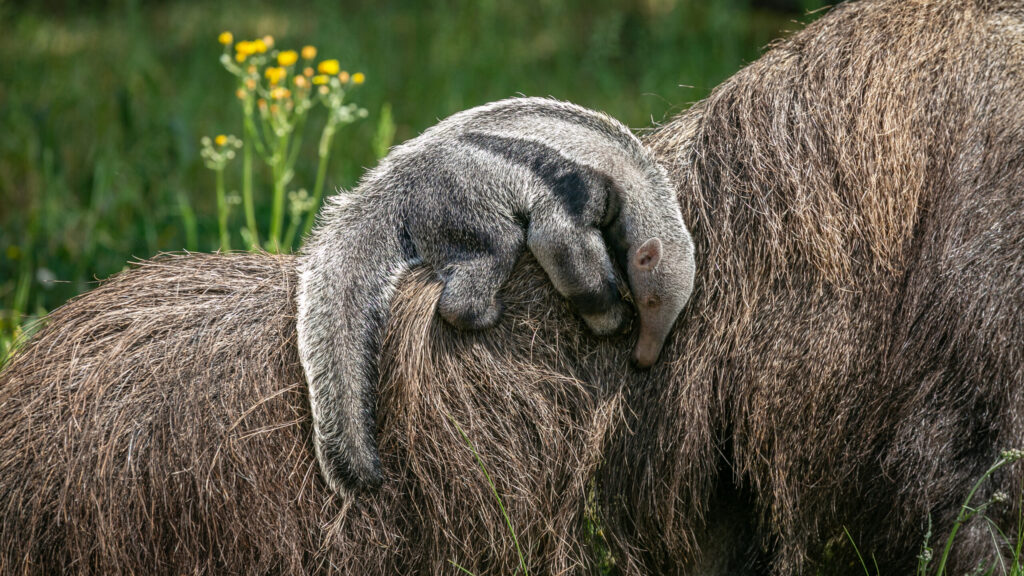
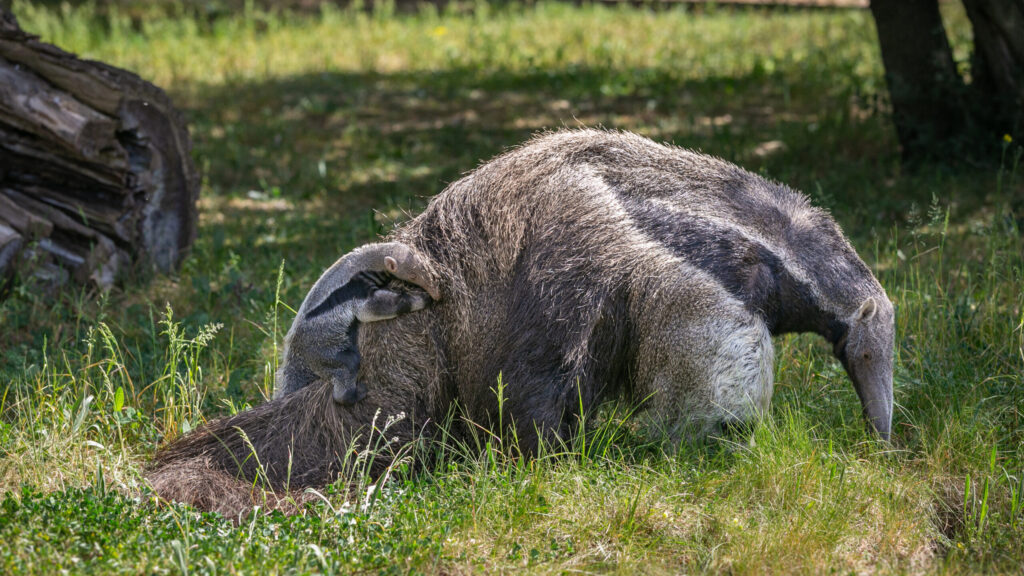
Since 2014, the Parc de La Barben has been home to a pair of anteaters, as part of a European Breeding Programme set up for the survival of the species. With success: they have already had four cubs!